

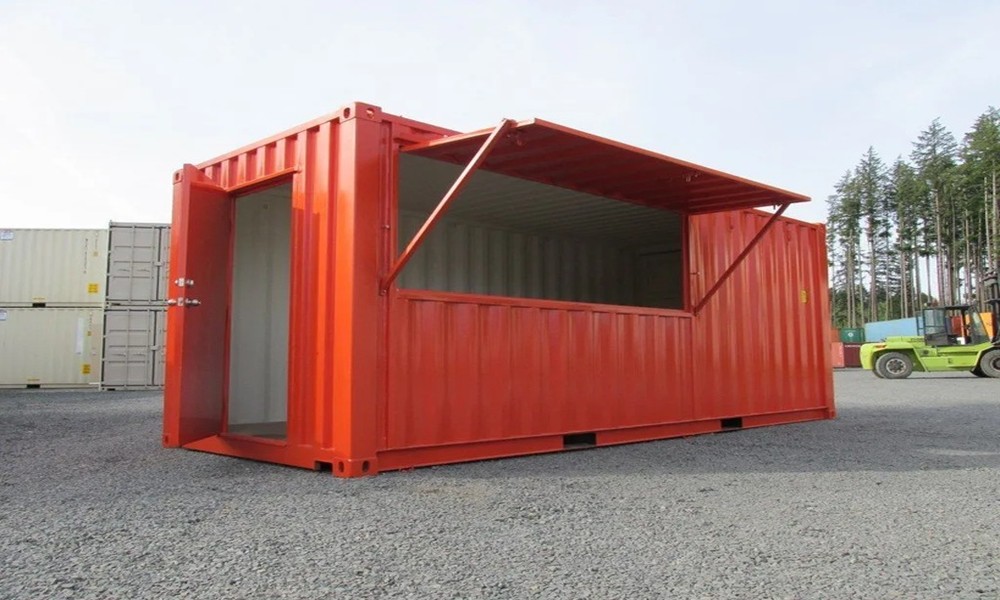
Small shipping containers serve a surprisingly broad range of purposes, from anchoring a construction site’s tool storage to providing a homeowner with overflow space during a long renovation. Their durability, security, and ease of transport make them one of the most versatile assets available to businesses and individuals operating in space-constrained environments.
Meeting the Needs of Three Distinct Users
The appeal of compact containers spans three main user groups, each with different priorities but overlapping needs.
Businesses value containers for their ability to protect stock, equipment, and documents in a cost-effective way. A small retailer without a dedicated stockroom can position a container at the rear of their premises and access it daily. A logistics company can use multiple units as decentralised staging points across different postcodes.
Site operators in construction, landscaping, and civil works rely on containers to keep expensive tools and materials safe and immediately accessible. Moving a container between job sites is relatively straightforward, making it a practical investment for contractors who work across multiple locations.
Personal users benefit most from the container’s weatherproof construction and robust security. Whether storing furniture during a move, keeping sporting equipment accessible through the seasons, or creating a secure archive for documents, compact containers fill a genuine gap that sheds and garages often cannot.
Why Size Matters in Container Selection
Choosing the right dimensions from the outset saves money and avoids the inconvenience of upgrading later. Small shipping containers are commonly available in 10-foot and 20-foot lengths, with heights typically between 8.6 feet (standard) and 9.6 feet (high cube).
A 10-foot container offers roughly 15 cubic metres of internal space, ample for most personal storage applications or a small business’s overflow inventory. A 20-foot unit doubles that capacity and is better suited to trade sites or businesses with larger storage demands.
Key dimensions to verify before ordering include:
- Internal height: Determines whether standard pallet racking will fit
- Door width: Affects what can be moved in and out without disassembly
- Payload capacity: Important for heavy goods such as machinery or bulk materials
- Floor rating: Hardwood or steel floors carry different loads and suit different applications
Site Suitability and Placement Considerations
Before a container is delivered, the intended placement area needs to be assessed. The ground must be firm and reasonably level – a slope of more than a few degrees can cause doors to bind and make the unit difficult to use. A gravel base or concrete pad offers the most stable foundation.
Access for the delivery vehicle is another critical factor. Tilt-tray and sideloader trucks require clear overhead space and a turning radius that suits larger vehicles. Confirming these details with your supplier in advance prevents delivery complications and potential extra charges.
Local regulations may also apply. In some areas, a planning permit is required if a container will remain on-site for more than a specified period or if it is visible from a public road. Checking with local authorities before the unit arrives is always advisable.
Modifications That Expand Functionality
One of the most practical aspects of small shipping containers is how readily they can be adapted for specific uses. Standard modifications available from most suppliers include:
- Shelving and racking: Maximises usable interior space
- Personnel doors: Added to the side of the container for easier access without opening the full end doors
- Ventilation panels or ridge vents: Reduce heat and moisture build-up inside the unit
- Electrical fit-outs: Lighting, power points, and data cabling for site office conversions
- Insulation: Useful for climate-sensitive storage or workspace applications
More extensive conversions can transform a basic container into a portable workshop, a mobile office, or a compact retail space. The structural integrity of the steel casing provides a reliable platform for almost any internal configuration.
As Minister for Trade and Industry Gan Kim Yong has noted about Singapore’s approach to industrial efficiency, “Adaptability is the foundation of competitiveness.” That insight holds true for container solutions, where the ability to modify and repurpose a unit over time delivers ongoing value well beyond the initial purchase.
Buying vs Hiring: Making the Right Decision
For short-term needs of up to six months, hiring is usually the more economical choice. Hire agreements typically include delivery and collection, and there is no residual asset to manage at the end of the project.
For ongoing or open-ended requirements, purchasing makes more financial sense. A quality used container purchased at a fair price can retain much of its value over many years and can be resold when no longer needed.
When assessing total cost, factor in:
Finding a Reliable Supplier
Quality varies considerably between container suppliers. A reputable provider will offer transparent condition grading, clear pricing, and the ability to inspect a unit before committing. They will also have appropriate transport equipment and the logistics capability to deliver on time.
Look for suppliers with established track records, verifiable customer reviews, and the capacity to handle modifications in-house rather than outsourcing to third parties. This ensures consistent quality and a single point of contact for any issues that arise.
For any application where reliability, security, and value matter, compact shipping containers continue to prove their worth for business, site, and personal use alike.